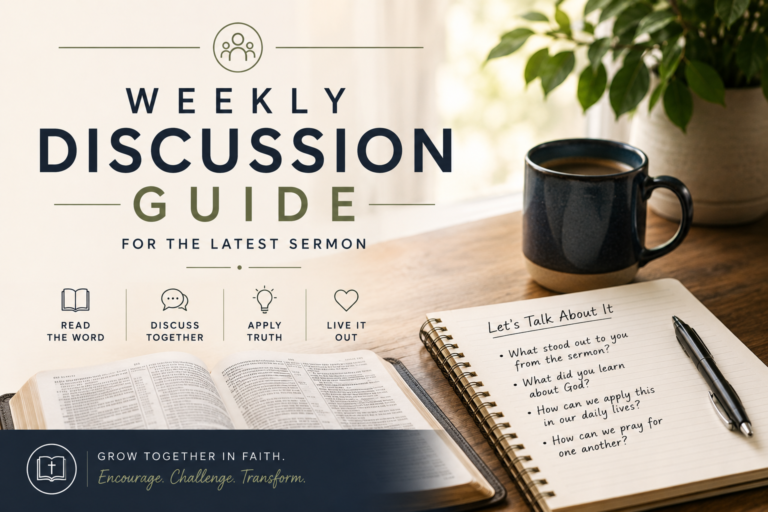

Discipleship Often Begins With One Conversation
When we talk about discipleship, it is easy to imagine programs, classes, curriculum, and carefully organized ministry structures.
Those things can be helpful.
But some of the most meaningful discipleship happens when one person makes room in their life for another.
It begins with a conversation.
Someone Took Time for Us
Most of us can remember someone who encouraged us during an important season.
Perhaps they answered a question, prayed with us, helped us understand Scripture, or simply listened when life was difficult.
They may not have considered themselves a mentor.
They were simply available.
And their willingness to invest in us made a difference.
Jesus Invested in People
Jesus taught crowds, but He also invested deeply in a smaller group of disciples.
They watched Him pray. They listened to His teaching. They saw how He responded to people. They asked questions and sometimes misunderstood what He was saying.
Jesus patiently continued forming them.
Discipleship involved life together.
You Don’t Need to Have Every Answer
One reason Christians hesitate to mentor others is that they feel unqualified.
What if someone asks a difficult theological question?
What if we don’t know what to say?
But discipleship does not require pretending to have everything figured out.
Sometimes a faithful response is simply, “That’s a good question. Let’s explore Scripture together.”
We are all continuing to learn from Jesus.
Begin With Listening
Before offering advice, take time to understand the person.
What are they experiencing? What questions are they asking? Where are they growing? What feels difficult?
James 1:19 reminds us to be quick to listen and slow to speak.
Good listening communicates care and often helps us recognize what kind of encouragement would actually be helpful.
Keep the Relationship Simple
Mentoring does not always require a formal commitment lasting several years.
Perhaps you begin by meeting for coffee once a month.
You might read a Gospel together, discuss a passage of Scripture, or pray about something happening in everyday life.
Consistency matters more than complexity.
Help People Discover Their Next Step
Rather than making every decision for someone, ask questions that encourage discernment.
What do you think Jesus is inviting you to do?
What have you learned from Scripture?
What might a faithful next step look like?
Good mentoring helps people grow in maturity rather than becoming dependent upon the mentor.
Encouragement and Calling
Sometimes a conversation helps someone recognize gifts or opportunities they have not considered.
The Encourager Pathways provide tools for exploring spiritual growth, gifts, calling, and service.
These resources can support conversations about how a person might participate more meaningfully in the life and mission of the church.
Discipleship Multiplies
Paul encouraged Timothy to entrust what he had learned to faithful people who would be able to teach others (2 Timothy 2:2).
That is a beautiful picture of multiplication.
One person invests in another, who eventually becomes capable of encouraging someone else.
Churches do not need to choose between organized discipleship and relational discipleship. Healthy structures can create opportunities for meaningful relationships.
Who Could You Encourage?
Think about someone in your church or community who may appreciate a conversation.
You don’t need to begin by announcing that you want to become their mentor.
Begin with interest, kindness, and availability.
Ask how they are doing. Listen. Pray. See where the relationship leads.
For church leaders interested in developing healthier discipleship and leadership pathways, explore Church Encourager or request a conversation.
Additional biblical and ministry education is available through Online Bible Institute.
Sometimes the beginning of meaningful discipleship is as simple as one person saying to another, “Would you like to get together and talk?”